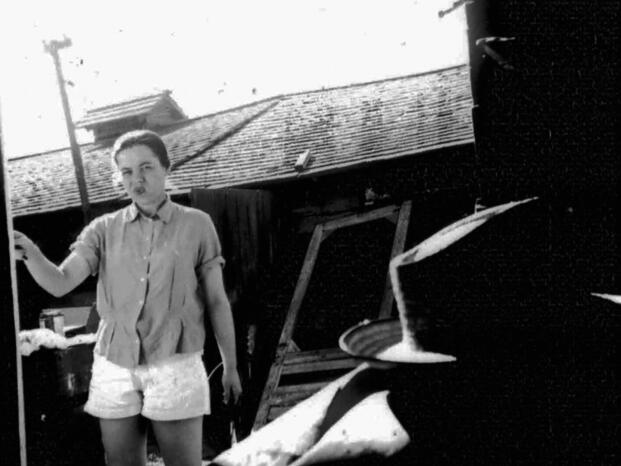
Website: https://violafrey.org
Website: https://artistslegacyfoundation.org/
Instagram https://www.instagram.com/violafreyarchives
Curator’s Statement
Cynthia de Bos, Director of Collections and Archives
Artists’ Legacy Foundation
Drawn to clay for its possibilities, Viola Frey challenged herself to explore myriad themes simultaneously – all of which allowed her to build and refine her distinct artistic practice. As an alumna of San Joaquin Delta College (1951-1953), Frey’s passion for clay was seeded here, under the tutelage of ceramics professor Bruce Duke. She continued her education at California College of Arts and Crafts (1953-1955) as a Painting major, so she would be taken seriously as an artist at a time when ceramics was considered Craft.[2]
Frey herself didn’t talk a lot about the meaning behind her work, as her statement suggests. She used artmaking as a tool to explore her ideas, her experiences, and her observations of the world around her.
Frey’s creative process seen in the works in the exhibition include Planet Full of People (1969) that was created following the moon landing that was broadcast on television, captivating the imagination of a generation. In Frey’s example, she shows figures and animals, rockets and cars circling the globe in an undulating rhythm. Junkyard Planet (1970-71) explored humans’ impact on the earth through the threat of species extinction, with astronauts circling a goose and the gas-guzzling automobile cruising through outer space.
Frey spent a lot of time reflecting on her childhood in nearby Lodi and what it meant to chase the California Dream, represented here as the automobile, in both CCAC Cadillac (Blue and White Plate) and Car Plate, California Dream Series (both 1972). Her childhood observations remained a life-long theme in her work, particularly farm life, the worker, and her father’s interaction with the land.
In the late 1970s, Frey focused on making work and honing her ideas. One such theme was the Phobia Series, in which she depicts a series of emotions, perhaps an exploration of her own feelings. A vibrant new material is added to her work around this time – Egyptian paste (or faience) – which she uses to draw and outline on hundreds of wall sculptures from this period on.
Frey’s voracious desire to work with clay as an artistic medium continued throughout her life, both as an artist and a professor in ceramics. Her work in clay blurred the distinction between Craft versus Fine Art, while pushing the boundaries of what ceramic sculpture could be, paving the way for future generations of ceramic artists.
Artist Statement
“My aesthetic concerns are multiple. I find they tend to cross-reference each other so earlier concerns are constantly meeting newer ones. At any given time, I am usually working on anywhere from six to eight interwoven ideas which, through different mixtures, develop into three or four separate statements. The individual statements may appear unrelated to each other until they are related to earlier works or to works yet to come.
One of the main concepts I have sought to develop is the element of play. Clues in the sculpture will lead eventually to a variety of meanings. Hats, shoes, and wheels, masks, and geese, to mention a few, are all clues. They are used as contemporary symbols, that are instantly recognized for what they are by their form, but may have many different meanings depending on their inflection, size, distortion, and association. The completed works are three dimensional puzzles where parts fit together.
Since they require a lot from the viewer, I do not object, from time to time, to providing a haphazard road map: one that has minimum directions and large parcels of unexplored territory for the viewer to fill in. At such times I myself become the viewer, stepping back, and needing the clues from past works to understand what I just created.”[1]
— Viola Frey, 1977
[1] “Viola Frey.” In Viewpoint: Ceramics 1977. El Cajon, CA: Grossmont College, 1977.
[2] For more about Art vs. Craft, see https://www.jracraft.org/jracraftnews/the-difference-between-art-craft
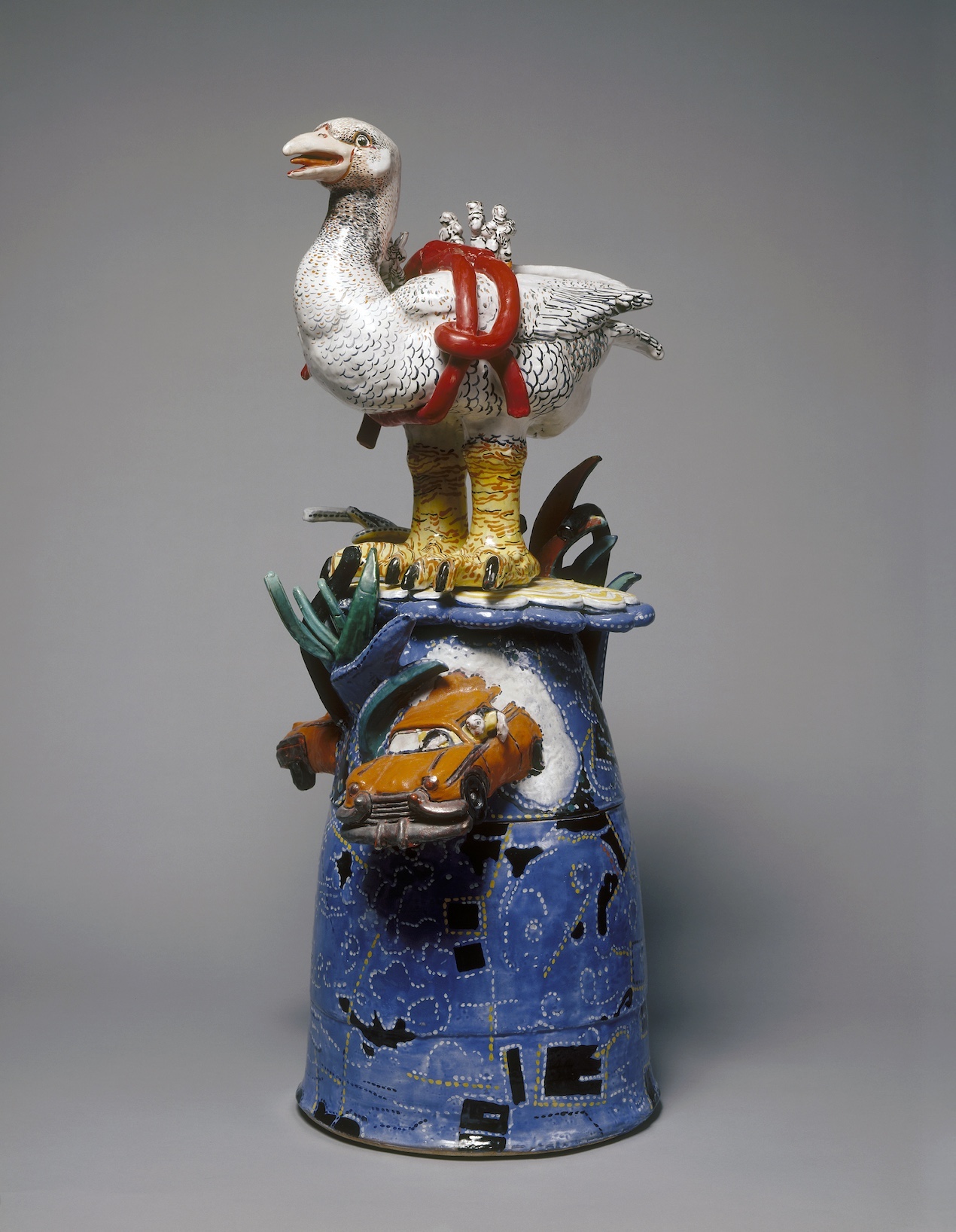
Junkyard Planet, 1970-1971
ceramic, glazes, China paint, and silver luster
44 x 18 x 18 inches (111.8 x 45.7 x 45.7 cm)
Photograph by Michael Tropea. Image courtesy of Racine Art Museum.
2026 © Artists’ Legacy Foundation, Oakland / ARS, New York.
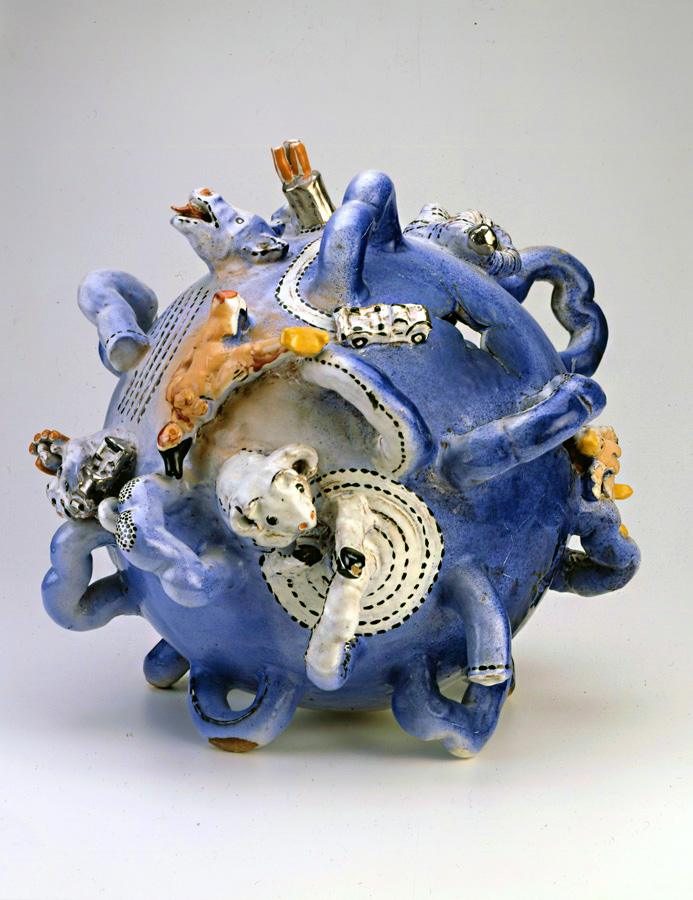
Planet Full of People, 1969
ceramic and glazes
18 x 18 x 18 inches (45.7 x 45.7 x 45.7 cm)
Photograph by John Wilson White. Image courtesy Rena Bransten Gallery.
2026 © Artists’ Legacy Foundation, Oakland / ARS, New York.
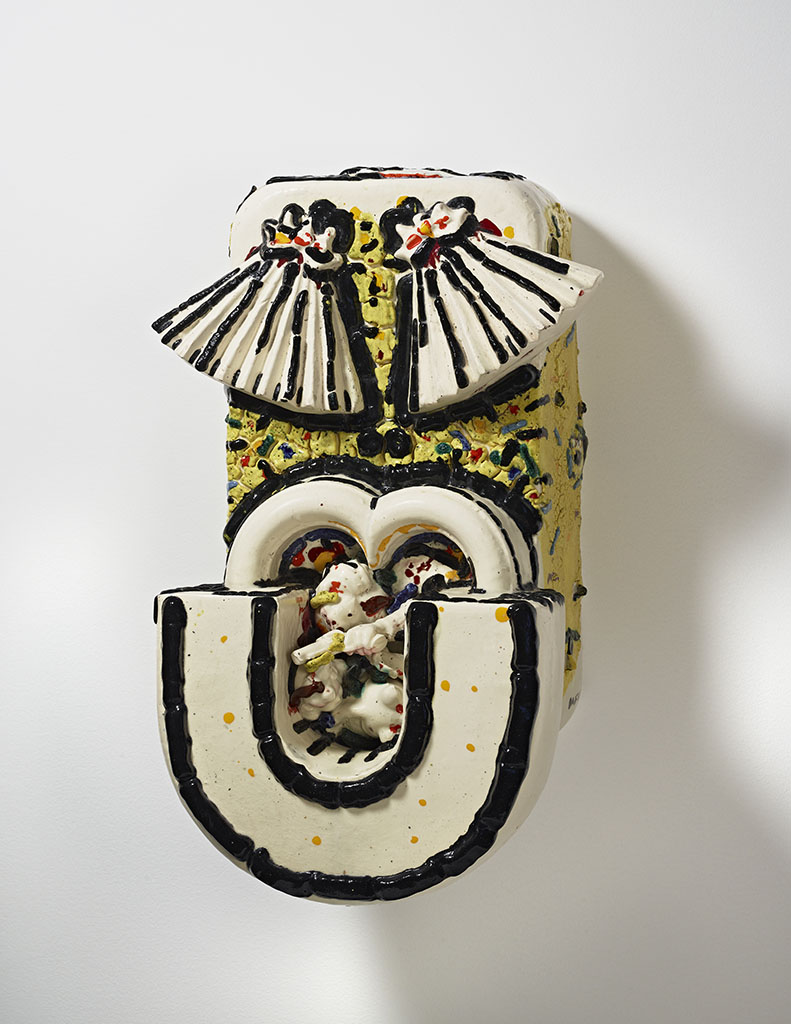
Phobia: Monster Head Don’t Eat Too Much, 1979
ceramic, glazes, and Egyptian paste
25 x 15 x 12 inches (63.5 x 38.1 x 30.5 cm)
Photograph by M. Lee Fatherree.
2026 © Artists’ Legacy Foundation, Oakland / ARS, New York.
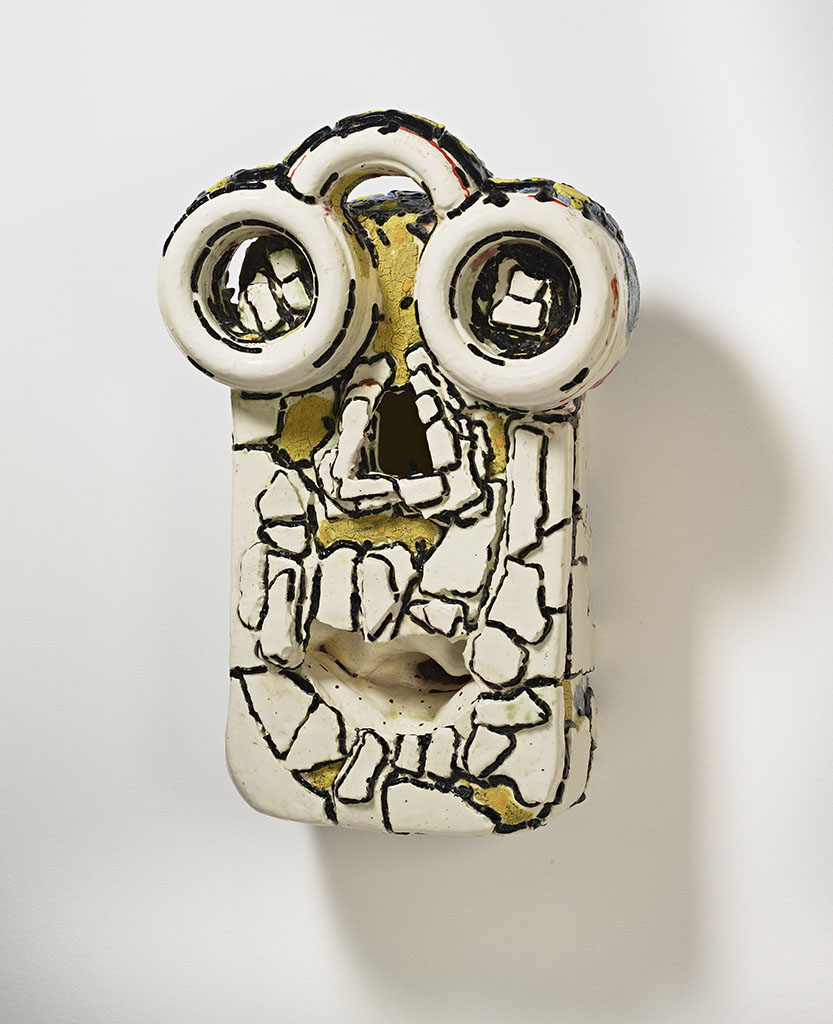
Phobia: Monster Head Don’t Die Yet, 1979
ceramic, glazes, and Egyptian paste
25 x 14 x 12 inches (63.5 x 35.6 x 30.5 cm)
Photograph by M. Lee Fatherree.
2026 © Artists’ Legacy Foundation, Oakland / ARS, New York.
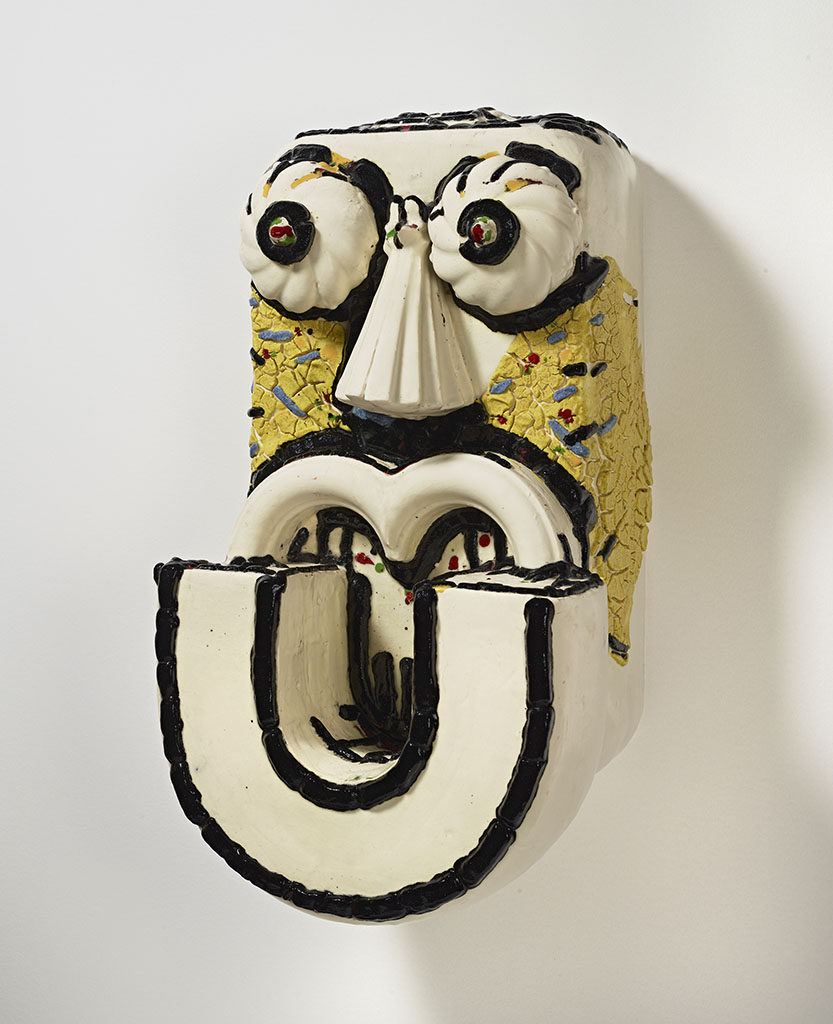
Phobia: Monster Head Don’t Shout, 1979
ceramic, glazes, and Egyptian paste
25 x 14 x 12 inches (63.5 x 35.6 x 30.5 cm)
Photograph by M. Lee Fatherree.
2026 © Artists’ Legacy Foundation, Oakland / ARS, New York.
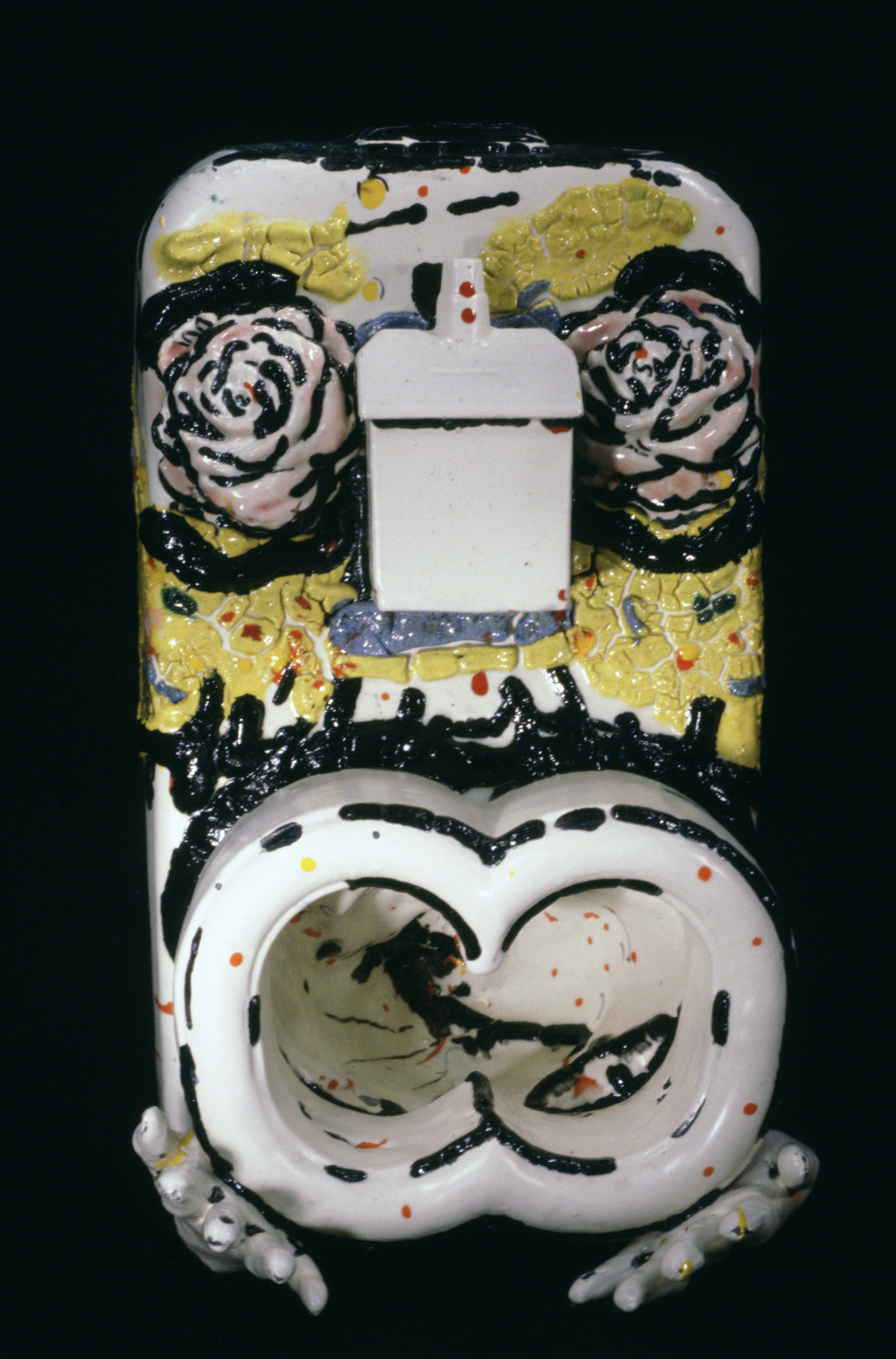
Untitled (Phobia with Hands to Mouth), 1979
ceramic, glazes, and Egyptian paste
26 x 15 x 12 inches (66 x 38.1 x 30.5 cm)
Artists’ Legacy Foundation, Oakland, CA
2026 © Artists’ Legacy Foundation, Oakland / ARS, New York.
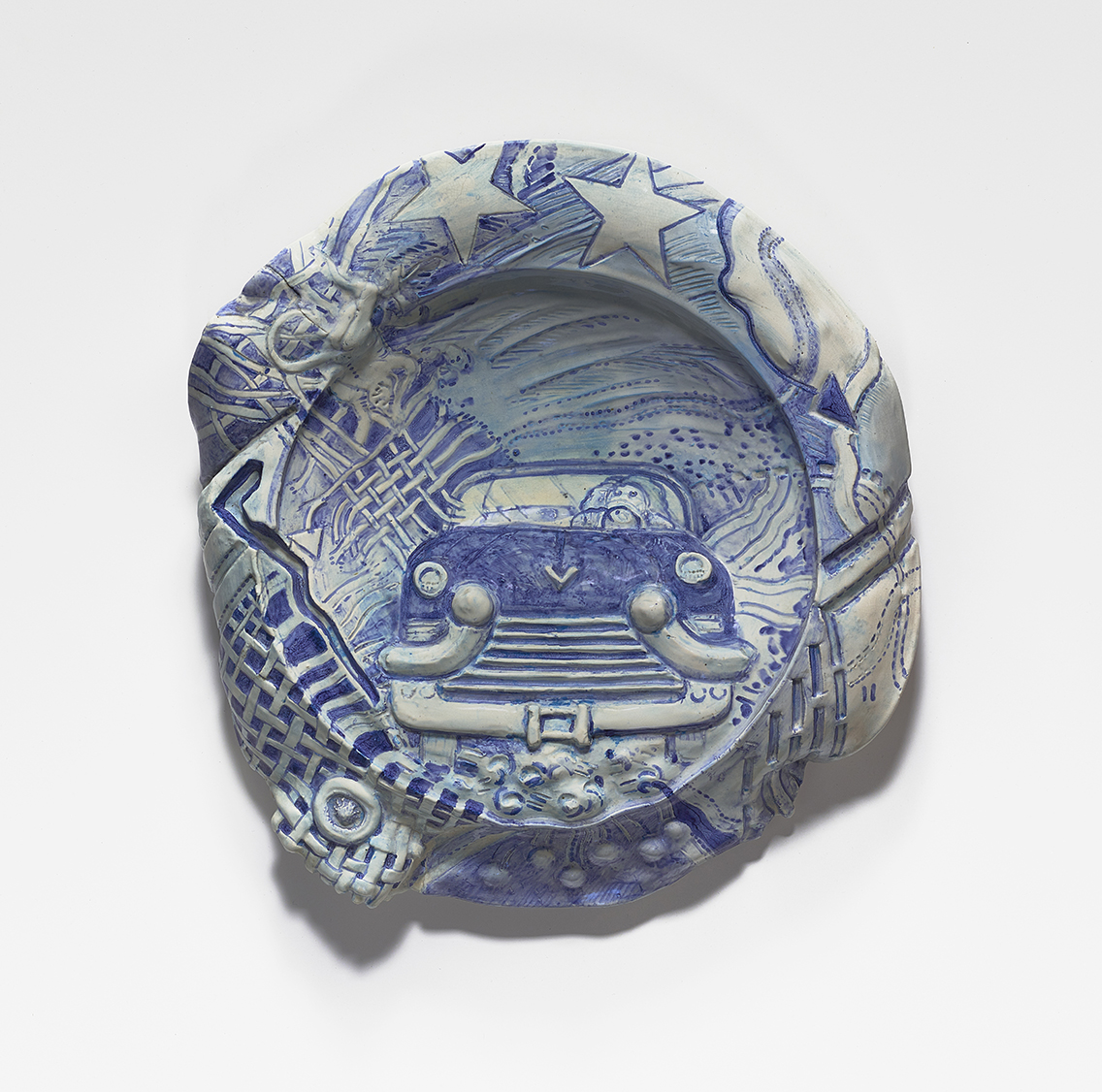
CCAC Cadillac (Blue and White Plate), 1972
ceramic and glazes
17 1/2 x 19 x 3 inches (44.5 x 48.3 x 7.6 cm)
Photograph by M. Lee Fatherree.
2026 © Artists’ Legacy Foundation, Oakland / ARS, New York.
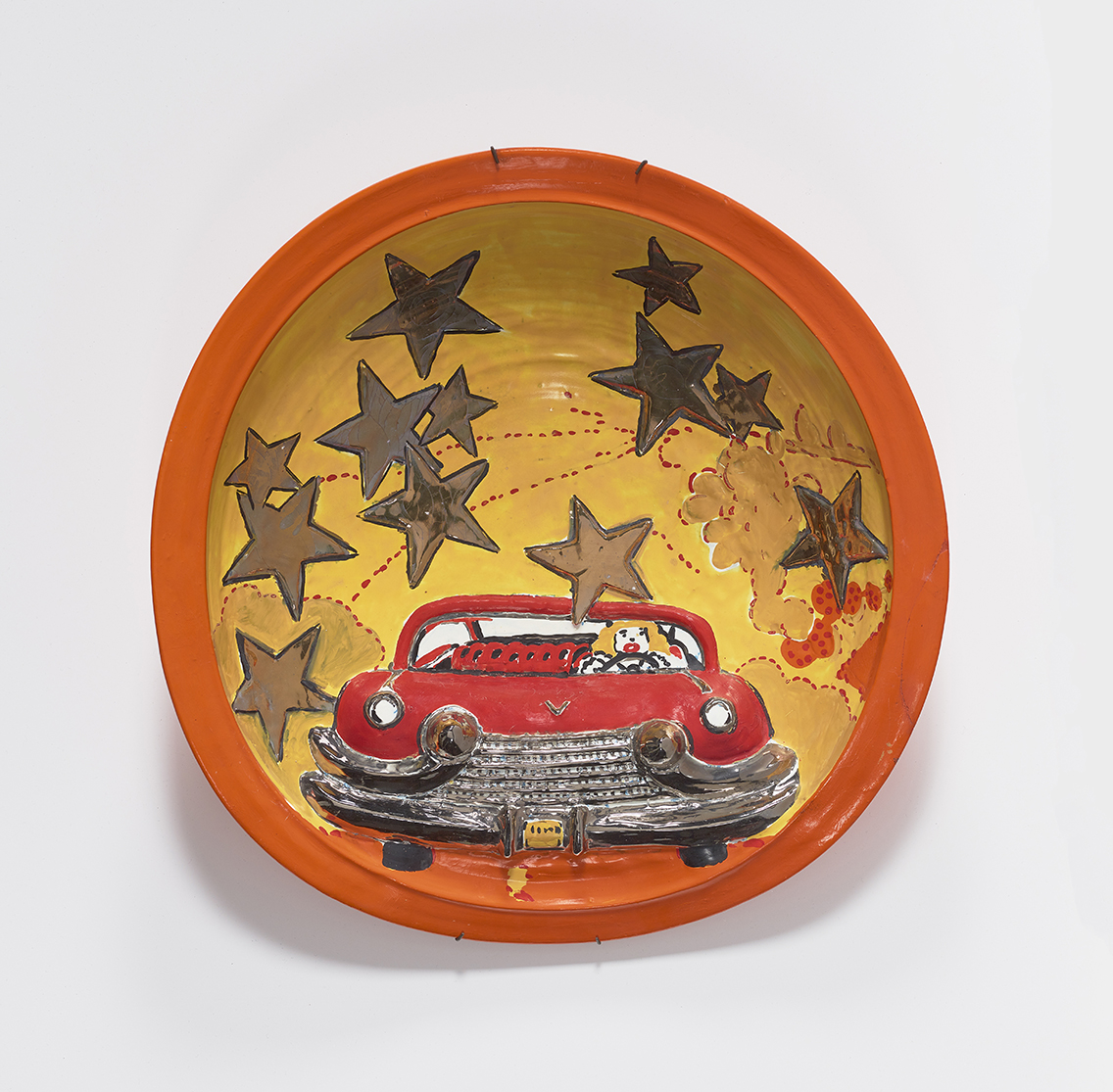
Car Plate, California Dream Series, 1972
ceramic, glazes, and gold and silver lusters
20 x 20 x 5 1/2 inches (50.8 x 50.8 x 14 cm)
Photograph by M. Lee Fatherree.
2026 © Artists’ Legacy Foundation, Oakland / ARS, New York.
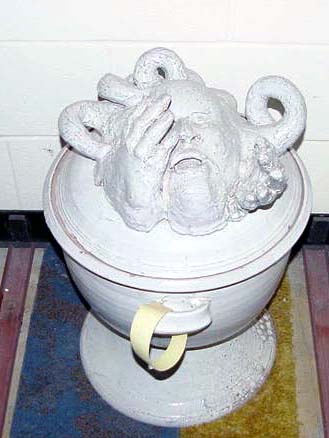
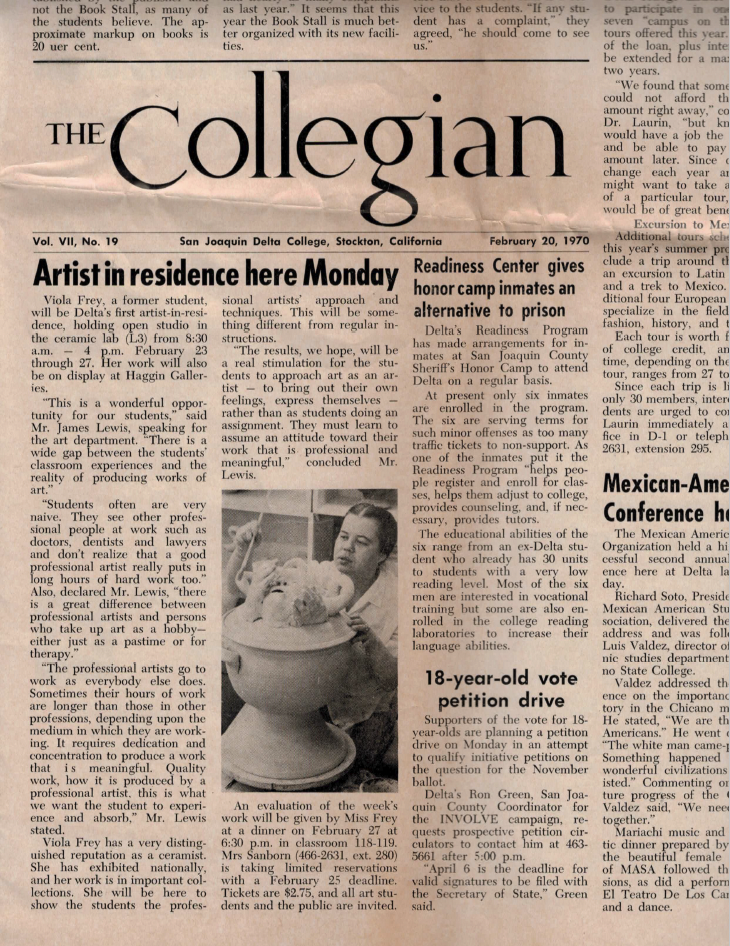
Frey Artwork made during her 1970 Artist Residence at SJDC
As seen in the news clipping from The Collegian: “Artist in residence here Monday.”
San Joaquin Delta College
February 20, 1970
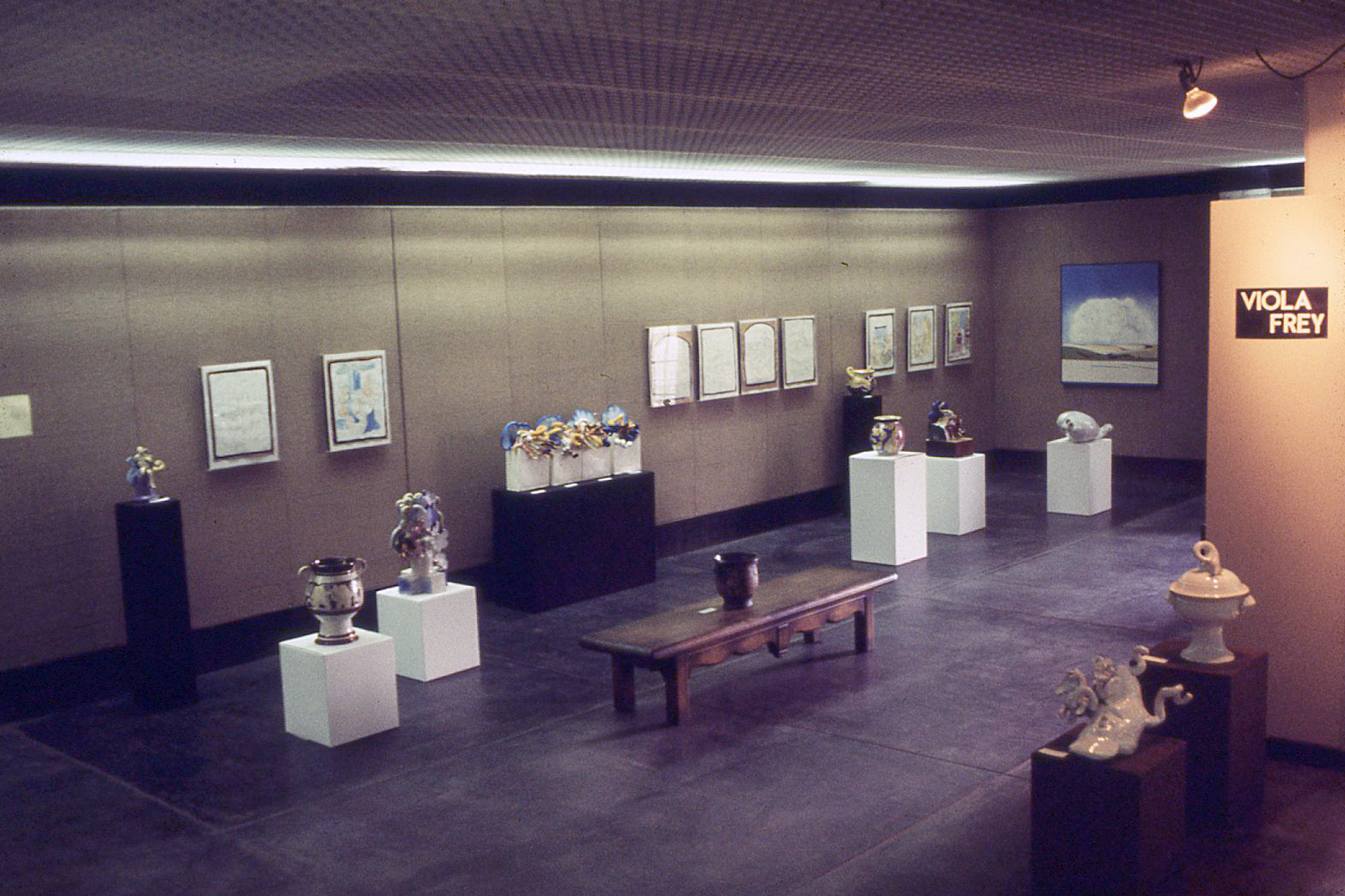
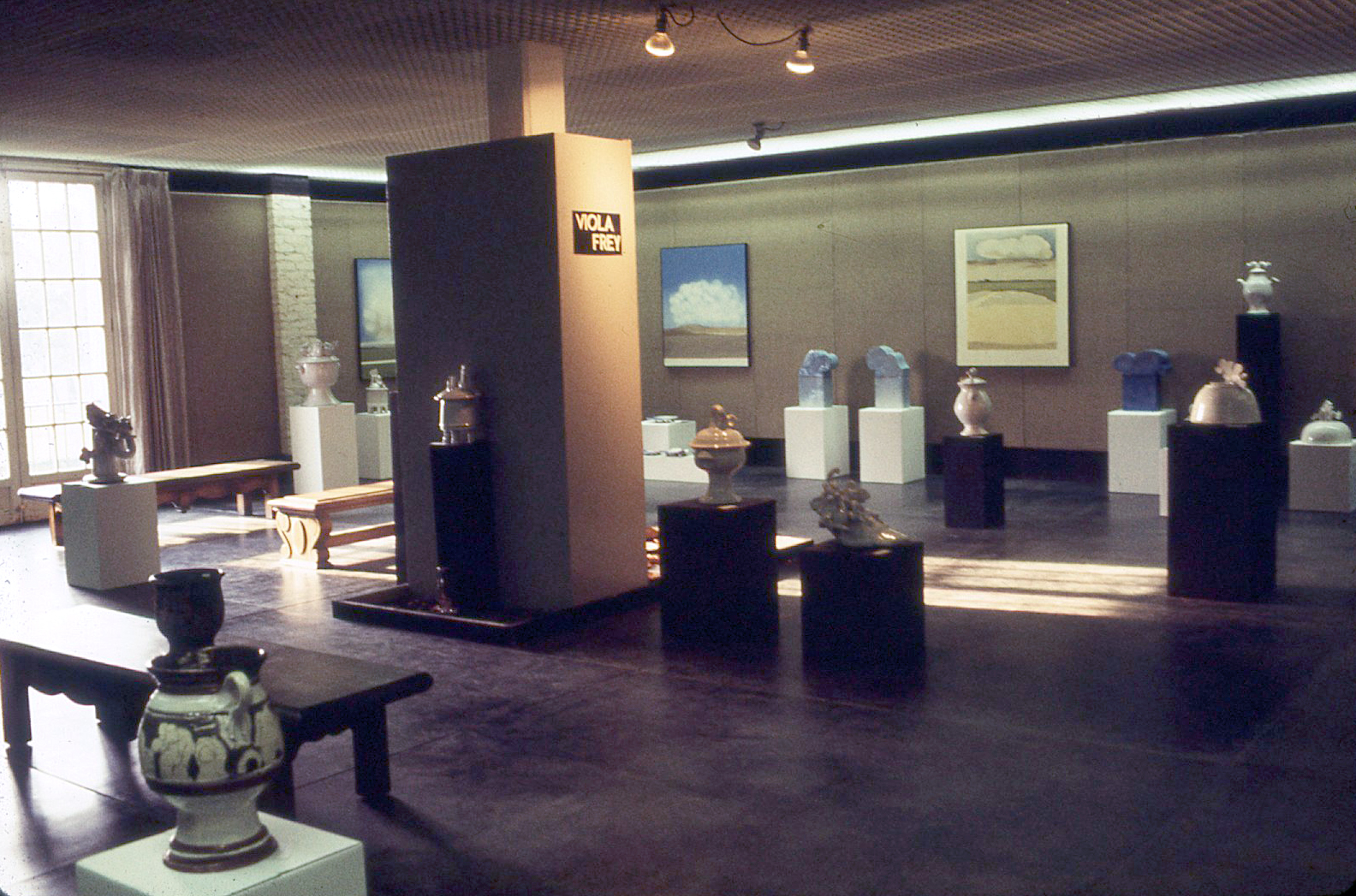
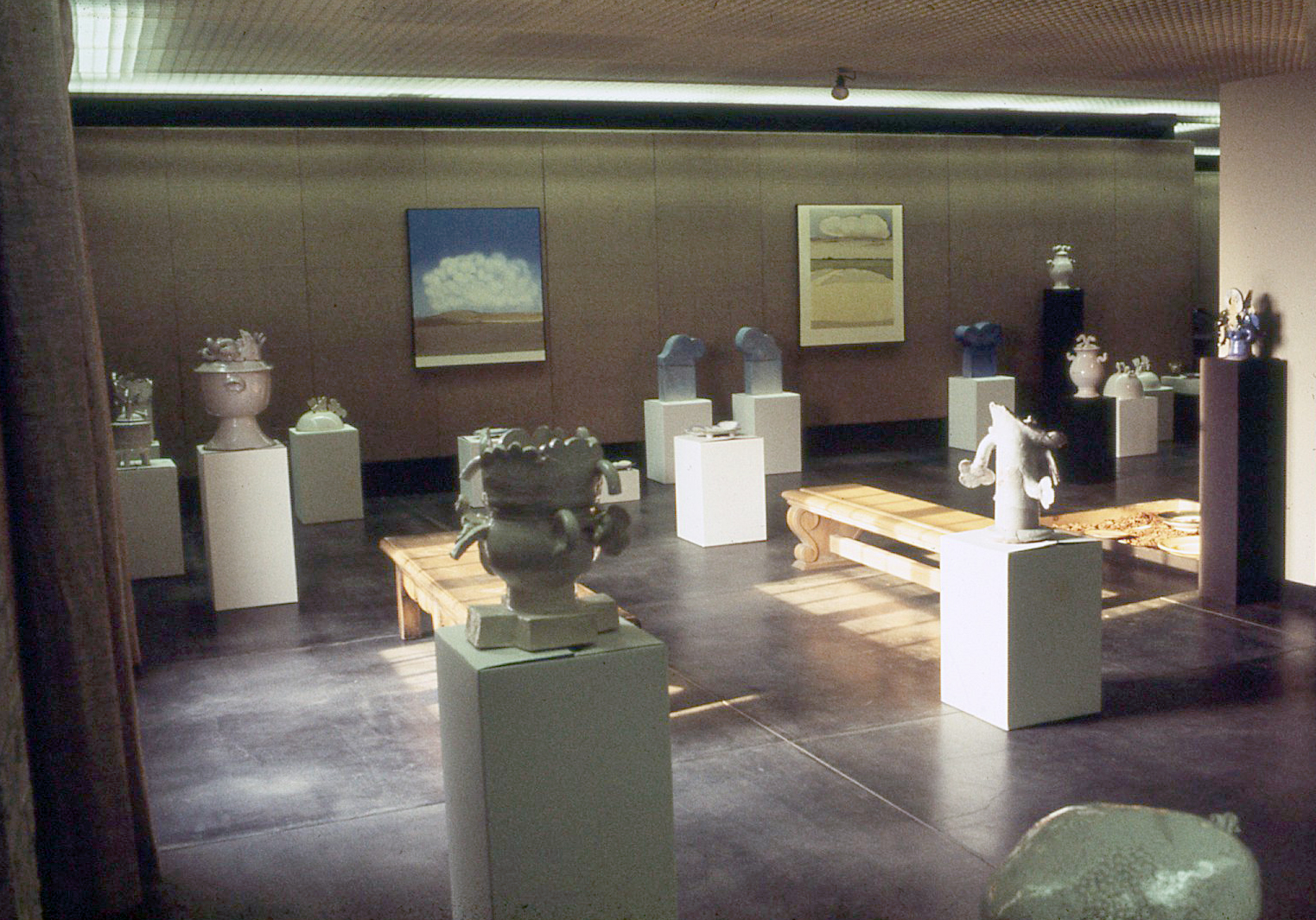
Installation of Viola Frey Exhibition, organized by San Joaquin Delta College
Pioneer Museum & Haggin Galleries
Stockton, CA, 1970
Pioneer Museum and Haggin Galleries was the historic former name of the Haggin Museum, located at 1201 North Pershing Avenue in Stockton, California. Opened in 1931, the museum combined local San Joaquin Valley history with a major 19th and 20th century fine art collection. It officially shortened its name to the Haggin Museum in 1981.