Engineering Technology
Get real-world experience that will help get you started in the engineering profession.
You don't have to transfer to a university to begin a career in the engineering industry. You can become an engineering technologist with your certificate or Associate Degree from Delta College.
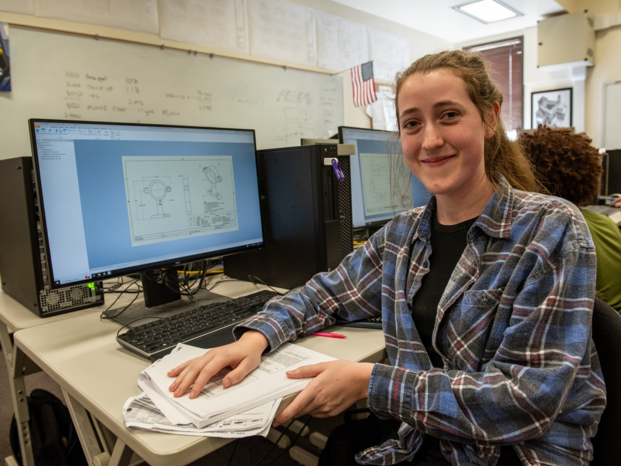
We offer hands-on learning so you can apply what you learn through labs, design projects, and teamwork that reflect real-world engineering challenges.
- Engineering Design
- Technical Drafting
- Manufacturing Technology
- Component Analysis
- Test Equipment Use
- Circuit Diagnostics
- STEM Integration
- Material Understanding
Finding the right program starts with knowing what you enjoy—if these skills and interests sound like you, you might enjoy studying Engineering Technology
Electrical Equipment Problem-solving Repair EngineeringBasic Electronics Technician Certificate of Completion
Upon successful completion of the Basic Electronics Technician Certificate of Completion, students will demonstrate skills, knowledge, and training for entry-level employment or career advancement in fields where analyzing and testing electronic circuit devices is standard practice. The course sequence is designed to meet the skills and training needs of employers and to prepare students for technical employment.
Control Systems Technician Certificate of Completion
Upon successful completion of the Control Systems Technician Certificate of Completion, students will be able to demonstrate knowledge of robotics and automation concepts used in the manufacturing and production industry. Topics include industrial robots, electrical and mechanical sensors, switches, PLCs, Human Machine Interface (HMI) and programming for robotic and automated systems. Students will learn the basic concepts for operating, maintaining, troubleshooting, and programming robotics and other automated systems. The certificate will prepare students to serve as technicians working with engineers on automated systems used in industry.
Electronics Technology Certificate of Achievement
The Electronics Technology Program provides students with theoretical background and practical experience in meeting the technical requirements of electronics and industrial technology. The course sequence is designed to meet the skill and training needs of employers and to prepare students for technical employment. Upon completion of courses, the student will be prepared to work in Consumer Electronics, Industrial Electronics, and with specialization in Digital Troubleshooting and Maintenance Automation and repair.
Engineering Fundamentals Certificate of Achievement
Upon successful completion of the Engineering certificate, the student demonstrates skills, knowledge, and ability for transfer to a Bachelor's degree program at a college or university, and the mathematical, scientific, and basic engineering theory courses required for upper division study in an engineering specific major. Delta College's program meets the lower division requirements established by the California Engineering Liaison Committee.
Engineering Technology Certificate of Achievement
Upon successful completion of the Engineering Technology certificate, the student demonstrates skills, knowledge, and training for employment as an engineering aide; computer aided drafter, designer, engineering technician, or other technical support position in the field of engineering. The student demonstrates his or her ability to document designs with appropriate technical drawings, perform and record engineering tests, and develop solutions for common engineering problems.
Engineering Technology, AS
Upon successful completion of the Associate in Science degree in Engineering Technology, the student demonstrates skills for employment as an engineering aid, computer-aided drafter, designer, surveyor, engineering technician, or other technical support position in the field of engineering. The student will have a basic understanding of the relationship between manufacturing technology, engineering materials and components, engineering measurements, engineering analysis, and engineering design. The student will be able to create industry-standard mechanical and civil drawings of advanced complexity.