Image
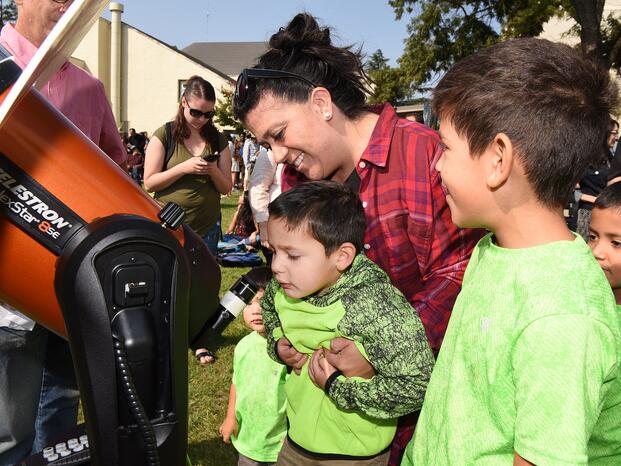
Delta College astronomy courses are designed to give mostly non-science majors a glimpse into the universe.
You will learn the basic foundations of astronomy, including the solar system, galaxies, the birth, evolution and death of stars, and cosmology. Through our lab courses, you will explore the practical side of astronomy, including how to set up and operate telescopes to observe the Sun or various objects in the night sky such as planets, the Moon, binary systems, nebulas, and galaxies.
Our introductory physical science course Matter and Energy (Physical Science 001) is a survey of physics, chemistry, geology, meteorology, and astronomy.
Transfer and Degree Requirements
- Astronomy courses fulfill general education requirements for an Associate in Science degree at Delta College.
- They can be also used to complete lower-division science credits for transfer to complete your bachelor's degree in physics or a related field.
Jobs and careers in astronomy
Studying astronomy can lead to a variety of career opportunities, including:
- Teacher
- Astrophysicist
- Aerospace Engineer
- Climatologist
- Observatory Manager
- Planetarium Director
- Science Writer/Journalist
- Telescope Operator
- Telescope Engineer